I Used to Love This Fandom. Then the Fandom Happened.

There is a very particular grief that comes with abandoning a fandom. It doesn't feel like breaking up with a show, a band, or a franchise. It feels like divorcing a neighborhood — you liked the house, you liked the trees, but your neighbors started leaving passive-aggressive notes on your car and now you just want to move to literally anywhere else.
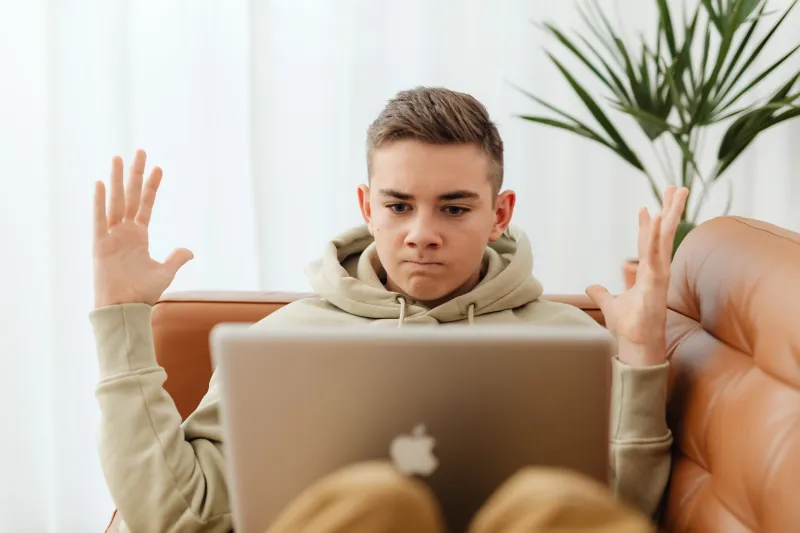
Welcome to the Great Unsubscribe. Fans across the country are quietly ghosting the communities they once called home, not because the content got bad (although, honestly, sometimes it did), but because the people got unbearable. And the exit isn't dramatic. It's more like slowly turning off notifications until one day you realize you haven't opened that subreddit in four months and your blood pressure is genuinely lower.
The Moment Everything Turned
Ask any recovering fandom participant and they can pinpoint the exact moment the vibe shifted. Maybe it was the shipping war that escalated from "I prefer these two characters together" to "if you don't agree, you are morally deficient as a human being." Maybe it was the day a beloved creator made one mildly clumsy comment and the community spent the next six weeks constructing an elaborate cancellation trial complete with receipts, counter-receipts, and a spreadsheet someone actually titled "Evidence Document v4."
The content didn't change. The community changed. And the community is everywhere — in the replies, in the fan wikis, in the Discord servers where there are seventeen channels and somehow all of them are on fire simultaneously.
One former Marvel fan described the experience with startling precision: "I just wanted to talk about how cool the new trailer looked. I ended up in a three-hour debate about whether my opinion meant I was a bad person. I watched the trailer by myself after that. It was fine."
Shipping Wars: When Fictional Romance Becomes a Blood Sport
If you've never witnessed a shipping war, congratulations on your peaceful internet experience. For everyone else: you know. You know.
Shipping — the fan practice of wanting two characters to be in a romantic relationship — is one of the oldest and most innocent traditions in fandom. It's basically just saying "these two have chemistry" and drawing some fan art. Harmless! Fun! A perfectly reasonable way to engage with fiction!
Except somewhere along the way, preferred pairings became ideological positions. Liking the "wrong" ship stopped being a difference of opinion and started being evidence of deep personal failure. Fan spaces that once felt like creative playgrounds transformed into courtrooms where your taste in fictional couples was submitted as character testimony.
The memes practically write themselves — and they have. Entire corners of Tumblr and Twitter are dedicated to archiving the most unhinged shipping discourse, preserved like fossils from a particularly chaotic era of human civilization. People screenshot these arguments and share them with the same energy you'd share a nature documentary about a rare and baffling animal.
Cancel Culture's Local Franchise: The Fandom Edition
Here's the thing about celebrity cancellations on a national scale — they're at least about real people doing real things. Fandom cancellations operate on a different, somehow more intense frequency.
Creators who built entire careers on community goodwill can find themselves in the middle of a full-scale pile-on over a years-old tweet, a poorly worded live stream comment, or the crime of acknowledging that another creator exists. The audience that once defended them with the energy of a medieval army will pivot — sometimes within hours — into the same formation, but pointed in the opposite direction.
For fans watching from the sidelines, it's exhausting in a way that's hard to articulate. You didn't sign up to have opinions about whether your favorite YouTuber's apology video was sufficiently sincere. You just wanted to watch someone play video games. And yet here you are, somehow emotionally involved in a community tribunal.
The rational response, which more and more people are arriving at, is to simply leave. Not with a manifesto. Not with a callout post. Just... quietly closing the tab and not opening it again.
The Quiet Exit (And Why It's Actually Kind of Healthy)
There's a reason the Great Unsubscribe doesn't come with a lot of fanfare. People who are done with toxic fandom spaces generally don't want to announce it, because announcing it means engaging with the thing they're trying to escape. It's like trying to leave a party by telling everyone at the party you're leaving — suddenly you're having seven more conversations.
Instead, the exit looks like this: you unfollow the main accounts. You mute the keywords. You let the Discord server accumulate unread notifications until the number is so high it becomes almost funny — a badge of honor, really. And then one day you realize you still love the show, the band, the game, the book — you just love it quietly now, by yourself or with one trusted friend who also just wants to enjoy the thing without submitting a thesis about it.
This is, genuinely, the healthiest possible outcome. Parasocial communities were never supposed to be your entire social infrastructure. Liking the same fictional universe as other people does not obligate you to share a moral framework with them. You are allowed to watch the movie and then simply go about your day.
The Content Is Fine. It Was Always Fine.
Here's the twist that nobody in the discourse wants to acknowledge: a lot of the content that fandom spaces imploded over was actually fine. Not perfect, sure. Occasionally disappointing, absolutely. But fine. Watchable. Enjoyable, even, if you weren't consuming it through a lens of community-manufactured outrage.
Some of the most dramatic fandom exits in recent memory were triggered not by the source material getting objectively worse, but by the community's reaction to it becoming more exhausting than the content itself. People didn't stop watching the show — they stopped reading the takes about the show. And then they realized they were happier.
The Great Unsubscribe isn't really about giving up on something you love. It's about reclaiming the right to love it on your own terms, without a Greek chorus of extremely online strangers telling you you're doing it wrong.
So if you've quietly exited a fandom lately — unfollowed the accounts, left the server, stopped checking the subreddit — know that you are not alone. You are, in fact, part of a growing and surprisingly well-adjusted movement of people who decided that enjoying things is better than performing enthusiasm at a community that forgot what enjoyment even felt like.
The content is still there. It'll wait for you. And it won't start a flame war about it.