Spotify Wrapped Is Just a Vibe Check You Didn't Ask For — and Everyone Is Watching
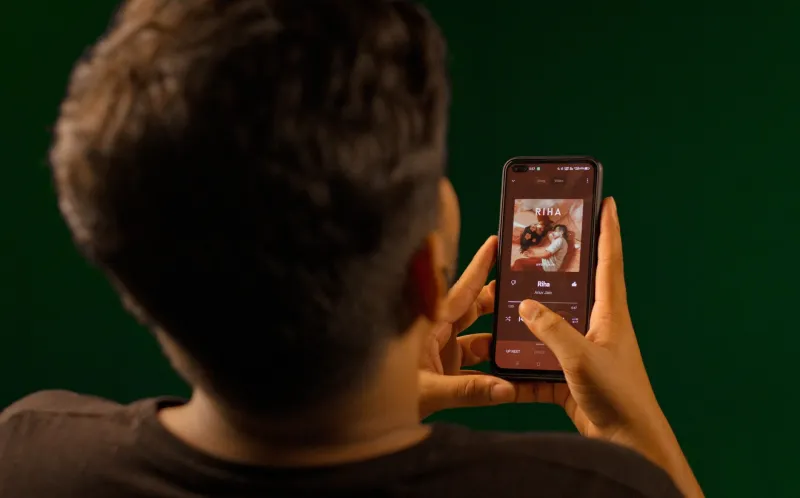
Somewhere around late November, a specific kind of dread starts quietly colonizing the brains of roughly 600 million Spotify users. It doesn't announce itself dramatically. It's more of a slow creep — a background hum of mild panic disguised as anticipation. You start doing the math. How many times did I actually replay that one Olivia Rodrigo song? You start rationalizing listening choices you made in February like a lawyer preparing opening arguments. And then, inevitably, Spotify Wrapped drops, and you are forced to reckon with the documented proof of who you actually are when no one is watching.
Except, of course, everyone is watching. That's kind of the whole problem.
The Algorithm Knows What You Did Last Winter
Spotify Wrapped launched in its current shareable form back in 2017, and since then it has quietly evolved from a fun little data recap into a full-blown annual social event with the emotional stakes of a college admissions letter. The feature itself is genuinely clever — colorful, digestible, designed to be screenshot-ready right out of the box. Spotify didn't just give you your listening data. They gave you a story, complete with aesthetic slides and a dramatic top-artist reveal that hits somewhere between a birthday card and a performance review.
The genius — and the chaos — is in how perfectly it was engineered for social sharing. Because the moment you post your Wrapped, you're not just sharing data. You're submitting yourself for evaluation.
And the internet, bless its heart, evaluates with extreme enthusiasm.
Why Does This Feel Like a Personality Test I Didn't Study For?
Here's where it gets genuinely interesting from a psychological standpoint. Music has always carried identity weight. What you listen to signals something about who you are, where you grew up, what kind of feelings you're willing to admit to having in public. That's not new. What is new is the quantification of it.
There's a big difference between casually mentioning you're into indie folk and Spotify announcing — in bold, cheerful font — that you were in the top 0.001% of listeners for a deeply niche post-breakup sad-girl playlist. One is a vibe you can control. The other is receipts.
When you share your Wrapped, you're essentially handing the internet a color-coded breakdown of your emotional life for the past year. And whether you're proud of it, embarrassed by it, or somewhere in the complicated middle, you've made a choice to perform your taste publicly. The anxiety kicks in because most of us know, on some level, that taste is being read as character.
Listened to a lot of mainstream pop? Some corners of the internet will quietly clock you as basic. Heavy metal and hyperpop? Chaotic, possibly unhinged (in the fun way). A suspiciously high number of hours logged to a single mid-2000s emo band? That's a cry for help disguised as nostalgia, and Twitter will find it.
The Unspoken Hierarchy of Acceptable Listening
Nobody writes the rules down, but everyone seems to know them. There exists an entirely informal — and entirely real — social hierarchy of what counts as a cool Wrapped versus a concerning one.
Having an eclectic, genre-hopping top five artists? Sophisticated. Relatable in an aspirational way. Post that with confidence.
Having one artist who accounts for 47% of your total listening minutes because you played their album on repeat during a rough patch last March? That's the kind of data point that requires a caption. People add disclaimers. They get ahead of the embarrassment with self-deprecating jokes. They pre-apologize for their top genre being "sad indie" or their top song being something that peaked in 2014.
The preemptive cringe is its own phenomenon. Entire tweet threads are dedicated to people roasting their own Wrapped before anyone else can. It's a defensive maneuver dressed up as humor — which, honestly, is a very internet way to process vulnerability.
Listening in the Shadows: The Rise of the Spotify Cheater
The anxiety has spawned a genuinely funny subcategory of behavior: people who actively game their Wrapped throughout the year. This is real. People will deliberately play artists they want to appear in their top five. They'll put on a critically acclaimed album they haven't actually listened to, let it run in the background, and quietly feel better about the algorithmic paper trail they're leaving.
This is the moment when a music streaming service has successfully convinced grown adults to curate their private listening habits based on how they'll look in a December slideshow. Let that sink in for just a second.
It's like doing homework for a class where the only grade is how your classmates react to your homework being posted on Instagram.
The December Scroll: Judging Everyone Else's Wrapped So You Feel Better About Yours
Of course, the flip side of Wrapped anxiety is Wrapped voyeurism, and that part is genuinely delightful. Every December, social media turns into an informal music taste tribunal, and people are enthusiastic jurors.
There's the obligatory round of posts from people whose top artist is something deeply unexpected — a country legend, a K-pop group, a single comedian's stand-up special that somehow qualifies as their most-played audio. There's the person who went fully feral with 180,000 minutes of listening time (who is this person, are they okay, do they sleep). There's the friend group that compares results and immediately starts arguing about who has the worst taste with the energy of people who care way more than they're willing to admit.
The whole ritual is oddly communal. For one brief, chaotic week, everyone is talking about music again — not in a gatekeeping, algorithmic-recommendation kind of way, but in a did you see what Sarah's top genre was kind of way. It's messy and judgmental and kind of wonderful.
So Why Do We Keep Posting It?
Here's the honest answer: because music is personal in a way that most things aren't, and sharing something personal — even with a layer of irony or self-deprecation buffering the vulnerability — is still a form of connection. Wrapped gives people a low-stakes excuse to say something true about themselves. This is what I was going through this year. This is what got me through it. This is the embarrassing song I couldn't stop playing in June.
The anxiety is real, but so is the appeal. We stress about being judged because we care about being known. And sometimes a Spotify slideshow is the closest thing we've got to saying: here's what my year actually felt like, in playlist form.
Just maybe don't let Spotify tell everyone how many times you played that one breakup song on repeat. Some data is sacred.