You Don't Know Your Own Passwords and Honestly That's a Modern Tragedy

Let's do a little exercise. No pressure, totally casual. Just try — right now, no peeking — to recall the password to your primary email account. Not the one you use for spam. The real one. The one your bank knows about. The one attached to literally everything.
Yeah. That's what I thought.
At some foggy, undocumented moment in the last decade, you outsourced your entire cognitive relationship with your digital identity to a combination of browser autofill, iCloud Keychain, and the heroic little blue link that reads "Forgot Password?" And honestly? You didn't even notice it happening. One day you were confidently typing "Fluffy2007!" into every website on the internet, and the next you were a helpless ghost floating through your own accounts, surviving entirely on the grace of Google's memory.
Welcome to the Great Password Amnesia. Population: everyone you know.
The Moment You Became a Digital Amnesiac
It didn't happen all at once. It was gradual. First, some well-meaning tech blog told you to stop reusing passwords. Then a data breach email from LinkedIn circa 2012 scared you straight. Then some website demanded a password with "at least one uppercase letter, one number, one symbol, one haiku, and the blood of your enemies," and you just started mashing your keyboard and letting Chrome remember it.
Now your passwords look like someone fell asleep on a keyboard: kJ#9mQx!2vLp. You didn't choose that. You don't know that. That is simply the string of characters that stands between a hacker and your Etsy wishlist full of personalized cutting boards.
The password manager, of course, was supposed to fix all of this. And in theory, it does. In practice, it just moved the problem upstream. Now instead of remembering 47 passwords, you have to remember one master password — which, if you forget it, collapses your entire digital life like a Jenga tower hit by a ceiling fan.
The Phone Is the Key and the Key Is the Phone
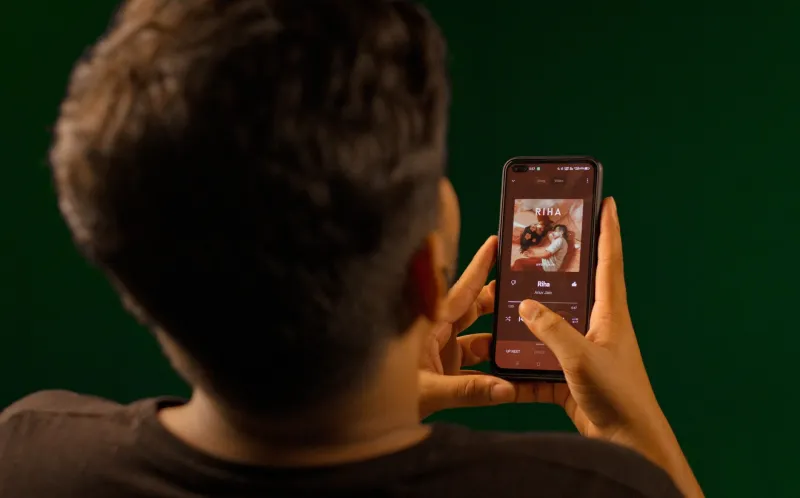
Here's where the existential dread really sets in: your phone is not just a phone anymore. It is the skeleton key to your entire existence. Your banking app, your email, your two-factor authentication codes, your saved passwords, your social security card photo that you absolutely should not have taken but definitely did — all of it lives in that little glass rectangle you drop in the toilet twice a year.
Lose that phone and you're not just phoneless. You are identity-less. You become a person standing outside your own life, knocking on the door of your own accounts, while automated systems politely ask you to verify your identity via a text message being sent to the device you no longer have.
The recovery process is a nightmare designed by someone who hates you. First, you try the backup email — the one you made in 2008 using a username you'd genuinely be embarrassed to say out loud. Then you try the security questions. "What was the name of your first pet?" You had three pets and cannot confirm which one you used. "What street did you grow up on?" You've moved four times. You are a stranger to yourself.
Tech Support and the Second Instagram Account From 2011
Nothing humbles a person quite like calling tech support to recover an account they created during the Obama administration. There is a specific energy to having to explain — out loud, to another human being — that yes, you do need access to your second Instagram account, the one with 47 followers and a bio that just says "📸✨ living my best life," because it's linked to a Facebook page for a small business you ran for eight months in 2013.
The tech support agent has heard everything. They are unmoved. They need you to verify the account. Can you confirm the phone number on file? It was a flip phone. Can you confirm the email? It was an AOL address. Can you confirm the last four digits of the payment method? You paid with a debit card from a bank that no longer exists.
You are a digital ghost haunting your own archive, and there is no exorcism available at this price point.
The Cloud Ate Your Brain (And Your Vacation Photos)
Cloud storage was sold to us as liberation. No more losing files! No more corrupted hard drives! Everything, everywhere, forever! And sure, technically that's true. Your 4,000 photos from a 2016 trip to Nashville are safe and sound in Google Photos, organized by face and location and "memories" that Google cheerfully resurfaces every year whether you want them or not.
But here's the thing about storing everything in the cloud: you stop actually knowing anything. You don't remember your friends' phone numbers because they're in your contacts. You don't remember directions because Google Maps exists. You don't remember anything you've ever agreed to because the terms and conditions are forty pages long and you clicked "Accept" without blinking.
Your brain, freed from the burden of practical memory, has simply moved on to other things — mostly Twitter arguments and the plots of shows you half-watched while scrolling. Congratulations. You traded functional memory for a very strong opinion about a Netflix series you can't finish.
The One Password You Actually Remember
Somewhere, buried deep in your personal history, there is one password you will never forget. It was your very first one. You made it in middle school or early high school, probably for AIM or Club Penguin or a Neopets account. It was something like soccer4ever or IloveTaylorSwift1 or the name of your crush followed by a number that meant something at the time.
That password is burned into your neurons permanently. It is completely useless now — every account it protected either no longer exists or has been compromised in seventeen separate data breaches — but you remember it with a clarity that you cannot apply to anything your doctor told you last Tuesday.
Your brain made a choice. It chose soccer4ever. You have to live with that.
So What Do We Do About This
Honestly? Nothing. There is nothing to be done. This is just who we are now. We are a civilization of people who cannot access our own accounts without a recovery email, who live in constant low-grade terror of phone theft, and who have given a corporation in Silicon Valley more knowledge about our passwords than we have ourselves.
The only real advice anyone can offer is this: write down your important passwords somewhere physical. Yes, on paper. Like an animal. Hide it somewhere only you know. Not your phone. Not another app. Paper. Pen. Drawer.
And maybe — just maybe — finally delete that second Instagram account from 2011.
You know, the one with the bio that just says "📸✨ living my best life."
You weren't. But it's okay. None of us were.