Quiet Luxury or Loud Emptiness? How TikTok Sold Us Beige as a Personality
Let's establish something immediately: there is nothing quiet about quiet luxury. The whole premise — understated wealth, subtle taste, the kind of effortless elegance that whispers instead of screams — has become the most aggressively marketed aesthetic on the internet. Your For You Page is not subtle about it. The influencers are not subtle about it. The $340 cashmere-adjacent crew neck is definitely not subtle about it.
We have somehow arrived at a cultural moment where the performance of not performing is the most elaborate performance of all. Welcome to the beige era. Please remove your shoes. They have too much going on.
How We Got Here (A Brief and Unhinged Timeline)
To understand quiet luxury, you have to understand what it was reacting against. The late 2010s and early 2020s were a maximalist fever dream: neon logomania, chaotic cottagecore, the Euphoria makeup era, Y2K everything, and a general aesthetic philosophy that could be summarized as "more, louder, please." Social media rewarded spectacle. The dopamine hit came from the scroll-stop.
And then, almost overnight, the pendulum swung. Shows like Succession started getting referenced in fashion discourse. The term "old money aesthetic" started trending on TikTok. Suddenly the aspirational look wasn't flashy streetwear or maximalist vintage — it was a $500 plain white shirt from a brand you'd never heard of, worn by someone standing in an architecturally significant kitchen.
The message was clear: real taste is invisible. Real wealth doesn't need logos. If you have to ask where it's from, you probably can't afford it, and also you're missing the entire point.
It's a compelling argument. It's also, when you look at it directly for more than thirty seconds, completely insane.
The Monetization of Doing Less
Here is the central irony of quiet luxury as an internet aesthetic: it is extraordinarily loud online. The #quietluxury hashtag has hundreds of millions of views. Influencers have built entire content ecosystems around the concept of owning fewer, better things — and they are posting about it constantly, daily, with lighting setups and carefully chosen props and brand partnerships with companies selling you the exact items you need to achieve the look of not trying.
This is the magic trick. "I don't care about trends" has become the trendiest possible thing to communicate. "I only own things I truly love" is being communicated through a sponsored post. The influencer in the $180 linen pants and the $95 white tank top is not performing anti-materialism. They are performing a more expensive version of materialism with better set dressing.
And it works! That's the wild part. The aesthetic taps into something real — a genuine exhaustion with overconsumption culture, a desire for calm, a fantasy of a life that isn't cluttered and chaotic. The problem is that the version being sold on TikTok is just clutter with a higher price point and a more neutral color palette.
Beige Is Not a Personality, But It's Trying
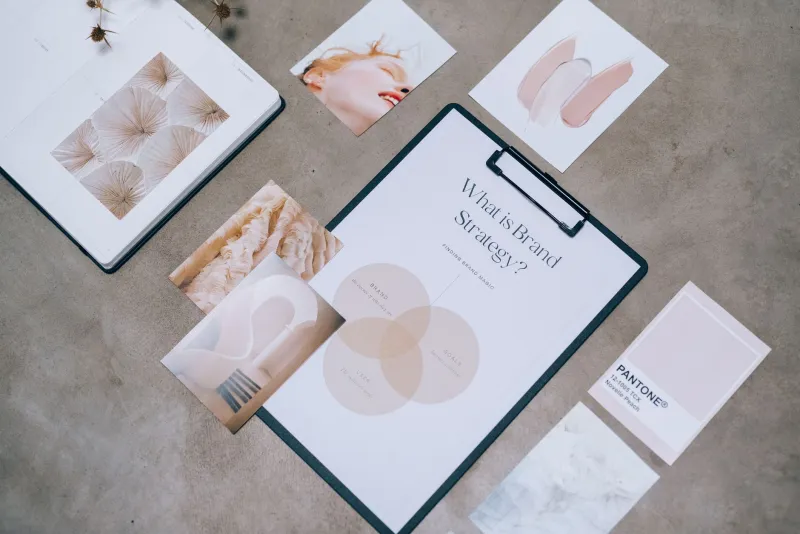
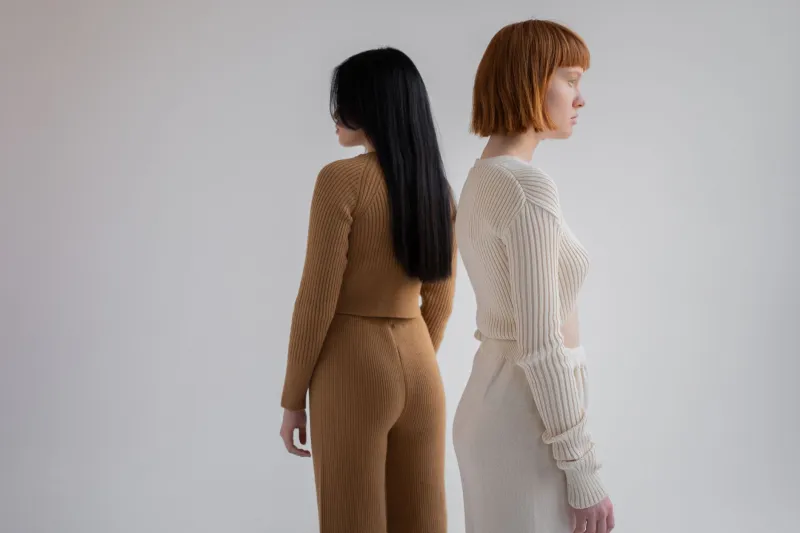
Let's talk about the aesthetics themselves for a second, because they deserve scrutiny. The quiet luxury visual language is very specific: cream, oat, taupe, sand, the occasional muted sage. Natural materials, or things that look like natural materials. Clean lines. Negative space. Surfaces that appear to have never been touched by a human hand.
This is a beautiful look. It genuinely is. The problem arises when the aesthetic starts being treated as a value system — when the beige linen becomes a signal of moral superiority over people who own colorful things, or when "I only buy quality" becomes a way to retroactively justify spending $400 on a tote bag.
There's a class dimension here that doesn't get talked about enough. The fantasy of "buying less but buying better" is only accessible at a certain income level. For most people, "buying less" means buying less, full stop — not upgrading to artisanal ceramics and a capsule wardrobe. Quiet luxury aestheticizes wealth by making it look like restraint, which is a very old trick dressed up in new linen.
Gen Z and the Authenticity Paradox
What makes this particularly fascinating is that Gen Z — widely credited as the generation most attuned to corporate manipulation and performative culture — is also the generation most actively participating in it. And they know it. The self-awareness is baked in. TikTok is full of videos deconstructing quiet luxury while simultaneously doing quiet luxury.
This is the authenticity paradox of the current internet moment: ironic participation is still participation. Posting "I can't believe I fell for the beige aesthetic" while wearing the beige aesthetic and filming it for engagement is not a subversion of the trend. It's just the trend with a caption.
Gen Z performs authenticity with extraordinary dedication. The insistence on "being real" and "not caring about aesthetics" has itself become an aesthetic. The most curated possible version of uncurated. The most intentional possible version of effortless.
What We're Actually Craving
Here's the generous read on all of this, because it exists: people are genuinely burned out. The scroll is relentless, the content is overwhelming, the expectations are exhausting, and the fantasy of a calm, minimal, beautiful life that isn't constantly demanding your attention is not a stupid fantasy. It's a pretty understandable one.
The desire to own less, to care less about status symbols, to build a life that feels considered rather than accumulated — that's real and worth taking seriously. The problem is that TikTok cannot sell you that desire without turning it into content, and the moment it becomes content, it becomes the thing it was trying to escape.
Beige isn't a personality. But the need for quiet? That part makes complete sense. You just maybe don't need to spend $280 on linen pants to find it.