Cottagecore Called and It Wants Its Entire Personality Back
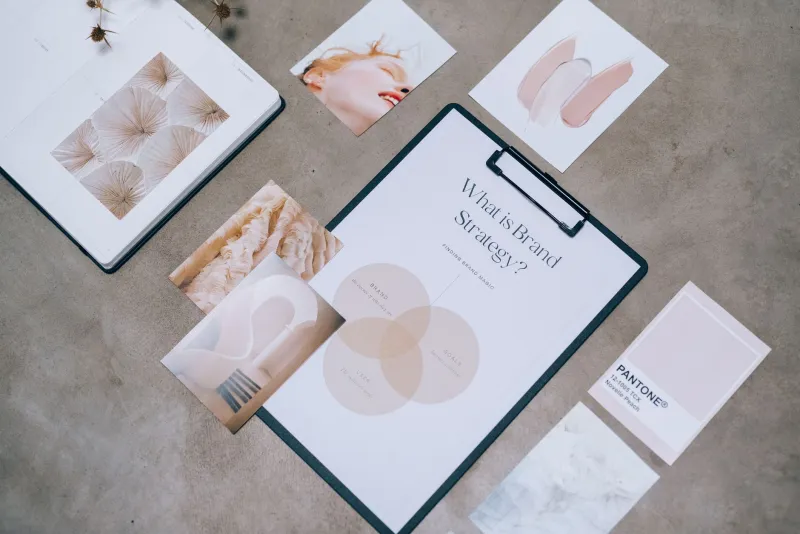
Somewhere in your camera roll, there is evidence. Maybe it's a flat lay of a linen notebook, a ceramic mug, and a sprig of dried lavender arranged on a wooden surface with natural light doing its absolute best. Maybe it's a mirror selfie in a chunky cardigan in front of a bookshelf you organized by color specifically for photos. Maybe it's a period-accurate journaling setup that took forty-five minutes to arrange and was used exactly once.
You were going through an era. We all were. We all are. The era never ends — it just rotates.
A Brief, Chaotic History of Aesthetics Owning People
Let's be clear: humans have always organized themselves into tribes with shared visual languages. Goths in the '80s, ravers in the '90s, the emo kids with the side-swept bangs who were definitely fine in the early 2000s. This is not new. What is new is the speed, the specificity, and the sheer volume of aesthetics now available for your identity consumption.
Pre-internet, you might cycle through two or three major aesthetic phases in your entire adolescence. Now, thanks to Pinterest boards, TikTok subcultures, and the algorithmic rabbit holes that make 3 a.m. extremely productive for aesthetic discovery, you can move through five distinct visual identities in a single semester.
Cottagecore arrived and suddenly everyone wanted a garden, a bread recipe, and a connection to the earth that their apartment lease technically prohibited. Dark Academia followed, and the same people were now buying tweed blazers and carrying books they weren't reading to coffee shops they were photographing. Then came Goblin Mode — the beautiful, chaotic rejection of all of it — where the aesthetic was, essentially, not having an aesthetic, which immediately became its own aesthetic with its own Pinterest board, thus defeating the entire point in the most internet way possible.
The Color Palette as Personality Replacement
Here's where it gets genuinely fascinating and slightly concerning: at some point, the aesthetic stopped being a decoration and started being a diagnosis.
You could tell people you were 'very Dark Academia' and they would understand your entire personality, your taste in music, your opinions on autumn, your likely coffee order, and your feelings about old libraries. The aesthetic became a shorthand so efficient it basically replaced having to explain yourself. Which sounds convenient until you realize you've painted yourself into a corner where buying a brightly colored kitchen appliance feels like a betrayal of your brand identity.
This is the trap. The aesthetic that started as a fun Pinterest board becomes a filter through which every purchase, outfit decision, and home decor choice must pass. Does this fit the vibe? Is this on-brand? Would someone who is truly cottagecore buy a neon green blender?
(No. They would not. They would buy a cream-colored one and feel conflicted about the cord.)
TikTok accelerated this dynamic to a degree that previous generations simply didn't have to navigate. The 'For You Page' is essentially an aesthetic sorting hat that decides what tribe you belong to and then feeds you content to deepen the commitment. Spend thirty seconds watching a video about maximalist home decor and suddenly your entire FYP is leopard print and gallery walls and you're questioning every minimalist choice you've ever made.
The Shame of Mixing Aesthetics
One of the most underreported anxieties of the modern internet age is aesthetic inconsistency guilt. The specific discomfort of realizing that your apartment is half warm-toned Scandinavian minimalism and half chaotic thrifted maximalism and those two things are apparently at war.
There's an unspoken pressure — especially on Instagram and TikTok, where visual cohesion is practically a currency — to pick a lane and stay in it. Your feed should tell a story. Your home should have a consistent mood. Your outfits should suggest a character who made intentional choices rather than someone who bought things they liked without consulting a manifesto.
The content creators who have mastered this are genuinely impressive in a way that is also slightly unnerving. Every corner of their apartment is curated. Every bookshelf is arranged with intentionality. Every morning routine involves lighting a specific candle and wearing a specific robe and drinking coffee out of a specific handmade mug. It looks peaceful. It looks aspirational. It also looks like a part-time job with an unpaid social media strategy component.
For the rest of us, aesthetic mixing is the norm. We're a little Dark Academia, a little Coastal Grandmother, a little Chaotic Goblin, and a lot 'I just bought what was on sale at Target.' And that's fine. That's human. That's what homes and wardrobes actually look like when you're living in them rather than filming them.
The Exhausting Upgrade Cycle
The other thing nobody talks about is how expensive aesthetics are when you take them seriously. Cottagecore, despite its pastoral, anti-capitalist vibes, requires a fairly specific set of purchases: linen everything, dried flowers, vintage kitchenware, at least one wicker basket. Dark Academia wants tweed, leather-bound journals, and a reading chair that costs more than your first car. Even Minimalism — theoretically the cheapest aesthetic — somehow always involves buying new, very specific, very expensive things to replace the perfectly functional things you already owned.
The aesthetic-to-purchase pipeline is not accidental. Brands figured out years ago that if they could attach their products to a coherent visual identity, they weren't just selling a candle — they were selling membership in a tribe. The $45 soy candle isn't a candle. It's proof that you're the kind of person who burns $45 soy candles. The distinction matters more than it should.
Goblin Mode Was the Off-Ramp We Needed (But Didn't Take)
When 'Goblin Mode' went viral — the concept of fully abandoning performative aesthetics in favor of chaotic, unbothered, unapologetically messy living — it felt like a cultural exhale. Finally, permission to just exist without a color palette. To eat cereal at 2 p.m. in a blanket nest without calling it a 'cozy season moment.' To be ugly and comfortable and unfiltered.
And then, almost immediately, Goblin Mode got aestheticized. There were Pinterest boards. There were TikTok tutorials on how to achieve the look. There were products.
The cycle cannot be stopped. It can only be observed, laughed at, and occasionally participated in despite knowing better.
So Who Are You, Actually?
Here's the liberating and slightly uncomfortable truth: you are not your aesthetic. You're also not not your aesthetic. You're a person who likes things, and some of those things happen to overlap with a named visual category that an algorithm has been enthusiastically serving you for six months.
You can love the look of Dark Academia without reading Donna Tartt. You can buy one cottagecore apron without committing to a lifestyle. You can appreciate the chaotic maximalist apartment without living in one.
Or you can fully commit to a rotating cast of aesthetics, change your entire vibe every season, and enjoy the ride. The internet has plenty of boards for all of it.
Just maybe don't let the color palette tell you who you are. That's a lot of pressure to put on a neutral linen palette.