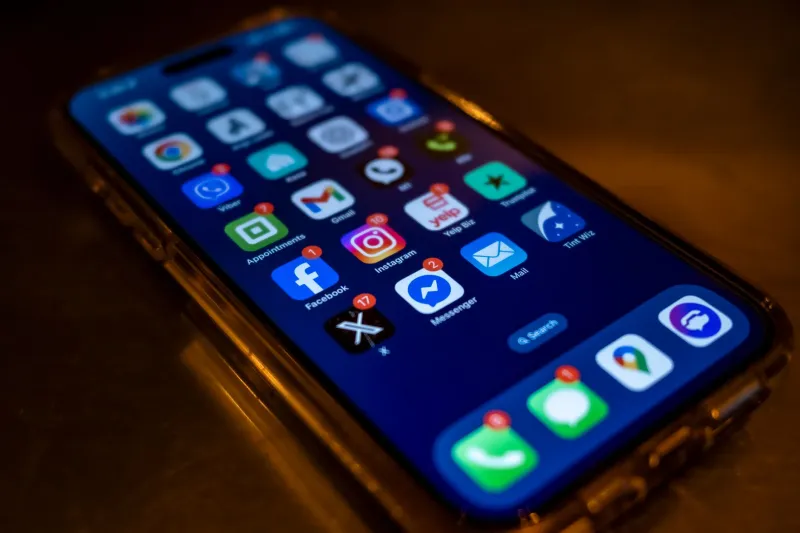
The Typing Bubble Appeared and Now I Have Trust Issues

It appeared for four seconds. Then it disappeared. Then it came back. Then it was gone again.
You watched the three animated dots like they owed you money. You put your phone down. You picked it back up. Nothing. The message never arrived. And now you're in a low-grade spiral about what was being typed, reconsidered, deleted, and withheld — all because of a small animated ellipsis that a software engineer added to iMessage probably without once considering the psychological consequences.
Welcome to the golden age of digital communication, where we have more ways to reach each other than at any point in human history and yet the whole thing has somehow become more stressful than a formal letter-writing era where you just waited three weeks and assumed everyone was fine.
The Rulebook Nobody Wrote (But Everyone Enforces)
Here is the deeply strange thing about modern texting etiquette: it is entirely uncodified, universally understood, and absolutely merciless.
There is no manual. No app notification that says 'by the way, here are the social norms.' And yet virtually every adult smartphone user in America has internalized a complex, constantly-shifting set of rules about response times, tone indicators, punctuation meanings, and the social weight of various reaction emojis — and will judge others accordingly.
A period at the end of a casual text reads as cold. Replying immediately to a first message can read as desperate. Waiting too long reads as dismissive. Using full sentences in a group chat where everyone else is using fragments makes you seem weirdly formal. Sending a voice memo when someone was expecting a text is a bold choice that will be discussed.
None of this was decided anywhere. It emerged, organically and ruthlessly, from the collective behavior of millions of people navigating a technology that arrived faster than the social norms to govern it.
Read Receipts: The Invention That Ruined Everything
Let's take a moment to fully appreciate the chaos that read receipts introduced into human relationships.
Before read receipts, there was plausible deniability. Maybe they hadn't seen it yet. Maybe their phone was dead. Maybe they were in a meeting, or a tunnel, or simply living their life without being immediately available to you, which used to be completely normal and is now somehow an act of aggression.
Read receipts removed the deniability. Now you know. You know they opened the message at 11:47 p.m. You know they read it. You know they thought about it — or didn't — and decided that a response could wait. Or forever. The timestamp is right there, a small digital receipt for the exact moment your message was acknowledged and then set aside.
This has created a fascinating cultural split. There are people who keep read receipts on as a statement of radical transparency — 'I will not pretend I haven't seen your message, and I trust you to understand that I'll reply when I can.' These people are either very emotionally secure or have simply not yet experienced the particular horror of leaving someone on read during an argument.
Then there are the people who turn read receipts off entirely, which is its own message. Turning off read receipts is the digital equivalent of closing your blinds. Technically fine. Definitely noticed.
Response Time Calculus Is a Real Thing We All Do
Admit it. You've done the math.
They texted you at 2 p.m. It's now 2:08 p.m. You've been staring at your phone. But replying in eight minutes feels too eager for the current social temperature of this particular relationship, so you'll wait until at least 2:35 p.m. and then reply casually, as if you were busy, as if you have a life, as if you did not see the message immediately and compose a response in your head within forty seconds.
This is insane. We all do it. It is completely insane.
The response time game has layers that vary wildly depending on context. Texting your best friend: immediate reply is fine, expected, good actually. Texting someone you're newly dating: a complex algorithm involving their last response time, the content of the message, the day of the week, and a vague sense of 'playing it cool' that nobody over thirty has the energy for but does anyway. Work Slack: technically should be fast, but replying too fast at 9 p.m. sets a precedent you'll regret. Group chat: the rules are chaos and everyone is making it up.
The Generational Divide Is Real and It's Hilarious
Here is where it gets genuinely funny: different generations, and even different friend groups, have wildly incompatible versions of what constitutes acceptable communication behavior.
For a certain subset of millennials, a phone call — unannounced, unscheduled, just ringing your phone — is an act of social aggression. You text first. You ask if they're free. You confirm. You maybe schedule the call. The idea of someone just calling with no warning reads as 'something is wrong' or 'this person does not respect my time.'
For Gen X and older millennials, a text that requires more than two exchanges to resolve should just be a phone call. 'Why are we doing this in fifteen texts when we could talk for two minutes?' is a sentence that will never land with a 24-year-old who would rather type for forty-five minutes than be on the phone for two.
And then there's Discord, which has its own entire civilization of communication norms. Server etiquette, DM etiquette, the specific social meaning of leaving a server versus going inactive — it's a whole subculture of unwritten rules that feels completely obvious to anyone inside it and completely baffling to anyone outside.
What Counts as Ghosting, Exactly?
This is the question that will not be resolved in our lifetimes.
Ask ten people what counts as ghosting and you'll get ten different answers, all delivered with the confidence of someone who has been personally wronged in exactly this way. For some, ghosting means going from daily contact to zero without explanation. For others, not replying to a single message within 24 hours has a ghosting-adjacent energy. For a brave few, ghosting is only ghosting if it happens after a defined relationship — dates, commitments, something formal — and merely not responding to a message from someone you've talked to twice is just... having a life.
The ambiguity is the whole problem. In the absence of agreed-upon rules, everyone applies their own framework and then feels genuinely hurt when others don't share it.
The Peace That Comes From Lowering the Stakes
Here's a genuinely useful thought, offered without irony: most of this is made worse by treating every digital interaction as a high-stakes social signal.
The typing bubble that disappeared probably means they got distracted, not that they crafted a message and decided you weren't worth sending it to. The late reply probably means they were living their life, not that they're establishing dominance. The read receipt left hanging at midnight probably means they were too tired to respond thoughtfully, not that they're composing a formal end to the friendship.
Probably.
The honest answer is that we've built communication tools of extraordinary intimacy — we can see exactly when someone read our words, watch them formulate a response in real time, and receive a message from anywhere on earth within seconds — and we're still using the emotional framework of people who had to wait by the phone.
The three dots appeared again.
They're still typing.
Everything is fine. You're fine. Put the phone down.
(Check back in forty-five seconds.)