Millennials Found Gen Z's Aesthetic Mood Board and Absolutely Will Not Give It Back
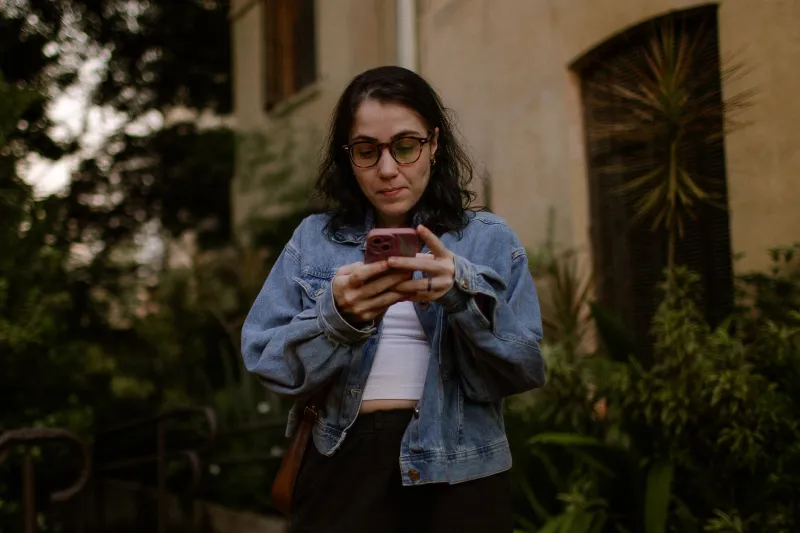
Picture the scene: a 34-year-old woman in Brooklyn — let's call her Madison, because statistically there is a 74% chance her name is Madison — posts an Instagram Reel of her child's bedroom. The walls are greige. The toys are wooden and vaguely Scandinavian. The linen curtains cost more than your first car. The caption reads: "Leaning into quiet luxury for the nursery 🤍 #beigeparenting #quietluxury #intentionalliving."
Somewhere, a 19-year-old on TikTok watches this and feels something she can't quite name. It's not rage exactly. It's more like watching someone walk into your house, rearrange all your furniture, and then act like they invented the concept of interior design.
This is the story of how millennials became the internet's most enthusiastic trend tourists — and why Gen Z is absolutely sick of it.
A Brief Timeline of Aesthetic Theft
Let's establish some ground rules. Trends have always traveled across generational lines. That's normal. What's not normal — or at least, what's newly accelerated — is the speed at which millennial culture consumers can identify, adopt, rebrand, and monetize Gen Z aesthetics before the original creators have even finished making the TikTok about it.
Consider the evidence:
Quiet Luxury started as a Gen Z rejection of flashy logomania — a vibe-first, brand-agnostic approach to dressing that prioritized quality and subtlety. By the time it hit mainstream millennial lifestyle content, it had been transformed into a $400 cashmere capsule wardrobe guide on Substack with a Spotify playlist called "Old Money Morning."
Dopamine Dressing — the idea of wearing maximally joyful, colorful clothing as a mental health practice — emerged largely from Gen Z's pandemic-era creativity and neurodivergent communities. Within eighteen months, it was a section in Real Simple magazine, complete with tips from a style consultant who definitely did not know what neurodivergent meant in 2019.
Beige Parenting is perhaps the most audacious example. A Gen Z-coded aesthetic reaction against overstimulating, plastic-heavy childhood environments became, in millennial hands, a full lifestyle brand. A parenting philosophy. There are beige parenting influencers with six-figure followings who will sell you a $65 linen play mat and call it intentional childhood development.
Gen Z created a vibe. Millennials created a revenue stream.
Why Millennials Are Like This (A Sympathetic But Honest Analysis)
Okay, let's be fair for exactly one paragraph, because balance is a core journalistic value or whatever.
Millennials — particularly elder millennials, the ones born between 1981 and 1988 — occupy a genuinely strange cultural position. They're too young to fully identify with Gen X cool-detachment, but too old to be native to the TikTok ecosystem. They came of age during a specific window of internet culture (MySpace, early Twitter, peak Tumblr) that no longer exists. And they are, many of them, deeply terrified of becoming uncool.
This fear is not irrational. American culture has always eaten its slightly-older-than-youth alive. The moment you stop being the target demographic, you can feel the cultural ground shifting beneath your Allbirds. So millennials do what any reasonable person does when they feel irrelevant: they adapt. They absorb. They pivot.
The problem is they do it loudly, with a podcast and a Patreon.
The Rebranding Machine
Here's the move, and once you see it, you cannot unsee it:
- Gen Z develops an aesthetic, usually born from genuine subcultural need or creative expression
- A millennial content creator "discovers" it on TikTok
- It gets a slightly more sophisticated name ("girl dinner" becomes "intuitive eating," "clean girl" becomes "effortless minimalism")
- A think piece appears in a major publication
- There is now a book deal
The rebranding isn't always malicious. Sometimes it's just the natural translation that happens when something moves from a niche online community to a mainstream audience. But the erasure of origin is consistent, and it's telling.
When a 22-year-old makes a TikTok about "bed rotting" as a coping mechanism for burnout, it's a funny, relatable video. When a millennial wellness influencer packages the same concept as "restorative horizontal rest" and sells a $29 journal to accompany it, something has gone wrong.
Gen Z's Increasingly Exasperated Response
To their credit, Gen Z has clocked this pattern with remarkable clarity and is very vocal about it. The discourse around millennial trend-vampirism is itself a thriving corner of TikTok, full of videos that essentially amount to: "We literally cannot create anything without you people absorbing it."
The comments on these videos are unhinged in the best possible way. Millennials show up to defend themselves in real time, which only confirms the original point. It's a beautiful, chaotic loop.
The generational tension here is real, but it's also worth noting that it's being actively stoked by platforms and brands that benefit enormously from generational conflict content. Every "millennials vs. Gen Z" TikTok is engagement gold. The algorithm loves a good beef. So while Madison in Brooklyn is genuinely annoying with her beige nursery, she's also, in some ways, a pawn in a content economy that profits from keeping everyone slightly irritated at each other.
Is This Cultural Theft, or Just How Trends Work?
The honest answer is: both, and neither, and it depends on who you ask.
Trends have always trickled, jumped, and crashed across demographics. What's new is the speed of the internet, the visibility of the process, and the very real economic dimension — because in the creator economy, being first to a trend isn't just about coolness, it's about money. When a millennial with 200,000 followers repackages a Gen Z aesthetic and monetizes it, they're potentially taking income from the actual originators.
That's less "generational quirk" and more "how capitalism works," but it's worth naming.
At the same time, the idea that any generation "owns" an aesthetic is a little silly. Culture moves. People borrow. The goal, probably, is to borrow with some awareness — to credit origins, to not pretend you invented something you discovered last Tuesday, and to maybe, just maybe, let the kids have one thing without immediately turning it into a Substack.
The Verdict
Millennials: we love you. You gave us emo music and the concept of a brunch as a lifestyle. You fought for things that mattered. But you have got to stop finding Gen Z's homework and turning it in as your own.
Gen Z: you're going to do this exact same thing to whatever generation comes after you. It's the circle of life. Hakuna matata. (That's a millennial reference. See? We get it.)
And Madison: the beige nursery is actually kind of cute. We won't tell anyone.