Crying on Camera, Cashing In: The Suspiciously Polished World of the Influencer Apology Video

Photo: D. Sharon Pruitt from Hill Air Force Base, Utah, USA, CC BY 2.0, via Wikimedia Commons
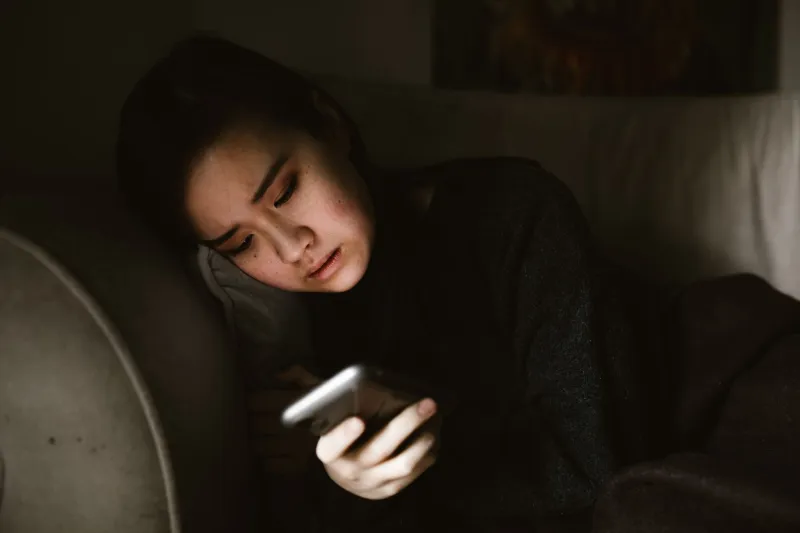
Somewhere between the third tissue grab and the dramatic pause before "I just want to be real with you guys," something clicked. This wasn't a breakdown. This was a production. The lighting was too warm. The music was too perfectly sad. And the creator's eyes — glassy but not quite crying — had clearly been rehearsed to hit that precise emotional frequency that reads as vulnerable without actually committing to full mascara destruction.
Welcome to the Influencer Apology Industrial Complex, where scandal is just a content pivot in disguise.
The Anatomy of a Perfectly Imperfect Confession
If you've watched more than two of these videos — and statistically, you have — you've noticed the formula. It's almost comforting in its predictability, like a McDonald's menu. You always know what you're getting.
First, there's the setting. Never a ring light. Never a professional backdrop. The apology must happen in what appears to be a real room, usually a bedroom or living room, because authenticity is the brand. Bonus points for a slightly unmade bed visible in the corner or a motivational candle burning nearby.
Then comes the opening. No jump cut, no intro music. Just the creator, already mid-emotion, staring directly into the lens like they've been sitting there for hours working up the courage. "Hey guys. So... I've been going back and forth about whether to make this video." Spoiler: they were never going back and forth. The video was always getting made.
Next: the non-specific acknowledgment of wrongdoing. This part is crucial. The creator must convey deep remorse while technically saying as little as legally actionable as possible. Phrases like "I know a lot of you are hurting" and "I didn't show up the way I should have" do heavy lifting here. What did they do exactly? The algorithm will fill in the blanks.
And finally — the pivot. After approximately eight to ten minutes of emotional processing, the creator lands on growth. They've learned. They've changed. They're going to take a little time away from posting (estimated three to seven days). And they love their community so, so much.
Who Actually Falls for This?
Here's the uncomfortable truth: a lot of people do, and that's not entirely their fault.
Humans are wired to respond to visible emotion. When someone cries in front of us, our brains register it as trust, as intimacy, as proof that a real person exists on the other side of the screen. Influencers — especially the ones who've been doing this for years — understand this at an almost molecular level. They've built careers on parasocial connection, and the apology video is just that connection weaponized.
Dr. Rebecca Tran, a media psychology researcher who has studied online parasocial relationships, put it bluntly in a 2023 interview with a digital culture journal: "Audiences have often invested years of emotional energy into these creators. An apology video isn't just content — it's an activation of that bond. People want to forgive because forgiving feels like maintaining a relationship they care about."
Translation: the video works because you want it to work.
The Creator's Side of the Breakdown
To be fair — and Boopi is always willing to be at least a little fair — not every influencer approaching this format is doing it cynically. Some of them are genuinely terrified.
Creators who've spoken publicly about scandal management describe an enormous pressure ecosystem that most viewers never see. When something blows up, the inbox floods, the brand deals go quiet, and the comment section becomes a rotating door of rage and defense. PR teams, managers, and sometimes actual crisis communications consultants get looped in. The "authentic" apology video is often the product of multiple drafts, strategic timing discussions, and decisions about which platform to post it on first.
One mid-tier lifestyle creator, speaking anonymously to a digital media outlet last year, described the experience as "performing grief under fluorescent lights while someone off-camera checks the engagement metrics in real time." She said she cried during her video because she was genuinely overwhelmed — but she also admitted she'd been told to "let it out" because it would "read better."
The line between real and performed emotion, in other words, has become genuinely impossible to locate.
The Audience Knows, and Watches Anyway
Here's where it gets interesting. Comment sections on apology videos are a masterclass in collective skepticism. "She's been crying for seven minutes but her eyeliner is still perfect" sits right next to "I genuinely believe her, she seems so real." Both comments have thousands of likes.
The internet has developed a dual-track relationship with these videos. On one track, viewers engage sincerely, extending grace, sharing their own experiences in replies, tagging friends who "need to see this." On the other track — usually simultaneously — the same viewers are on Reddit compiling a frame-by-frame breakdown of suspicious editing cuts and noting that the creator's Depop shop quietly restocked during the video's upload window.
We watch to feel. We also watch to catch. And the creators who survive long-term are the ones who've figured out how to satisfy both impulses.
The Next Inevitable Downfall Is Already Loading
The truly wild part of the Influencer Apology Industrial Complex isn't that it exists. It's that it has a sequel built in.
Because here's the thing about a format built on performing growth: it requires periodic proof of imperfection to stay credible. An influencer who never stumbles starts to feel curated, fake, unrelatable. The scandal — and the tearful reckoning that follows — has become part of the content lifecycle. Fall down. Get up on camera. Monetize the getting up.
And the audiences? They'll be there for both. The main event and the breakdown. The breakdown and the comeback arc. Possibly the comeback arc's own eventual apology video, if things really go sideways.
Is it cynical? Absolutely. Is it also deeply human, this need to watch people crack and reassemble in public? Also yes.
So next time you find yourself twelve minutes deep into an influencer crying about "not being their best self," don't feel bad. Just know exactly what you're watching — and maybe check if their merch store is running a sale. Because somewhere, someone definitely timed it that way.